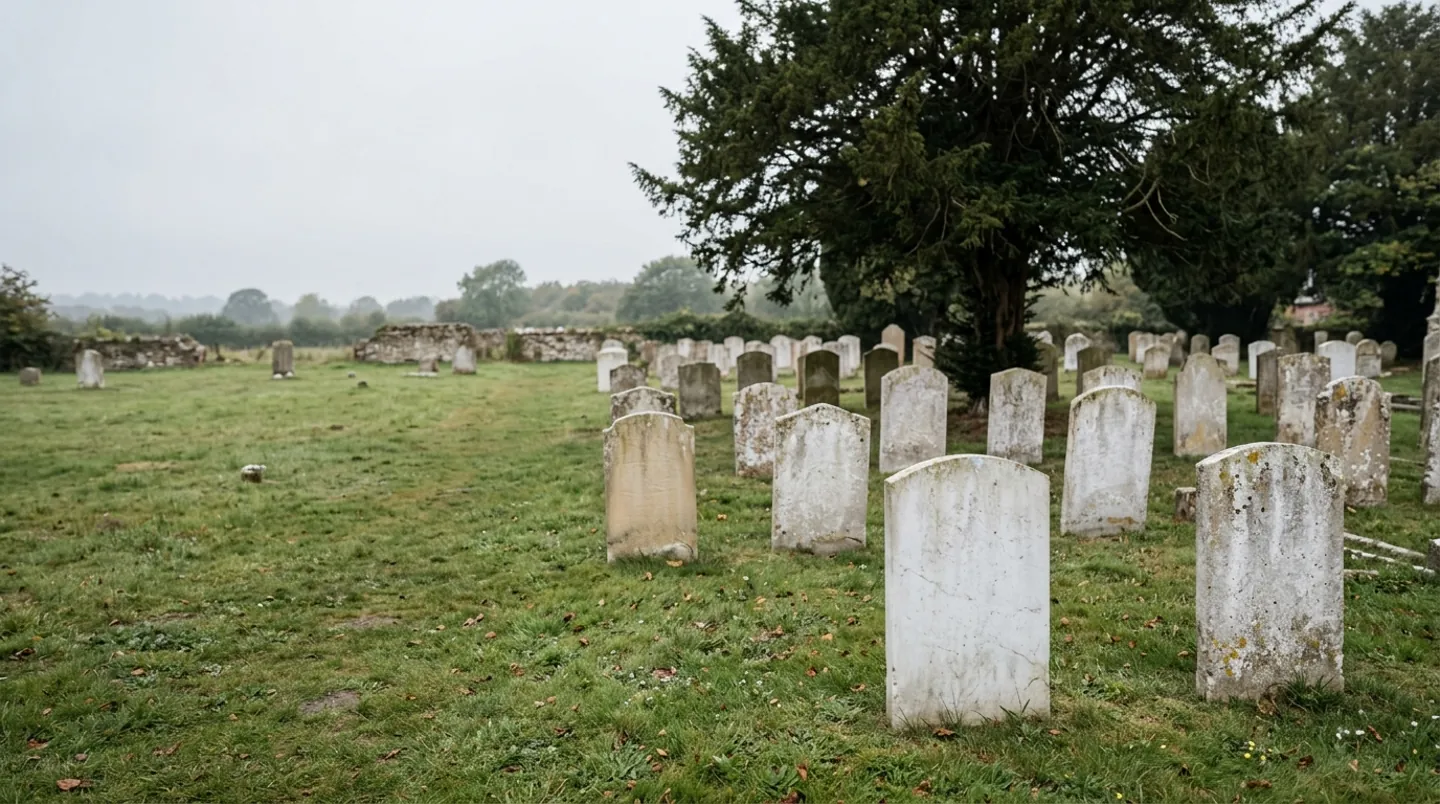
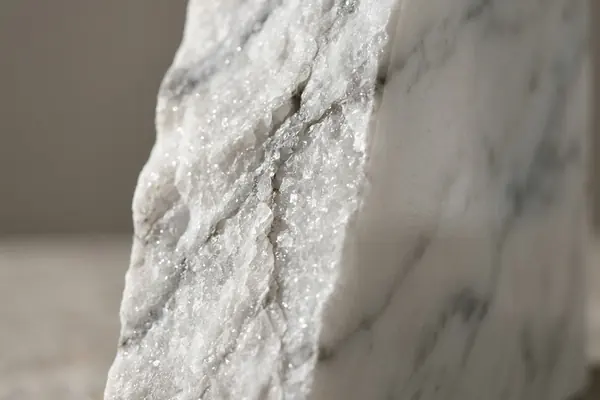
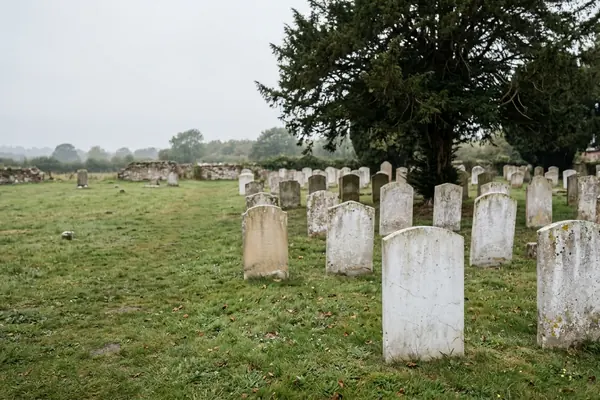
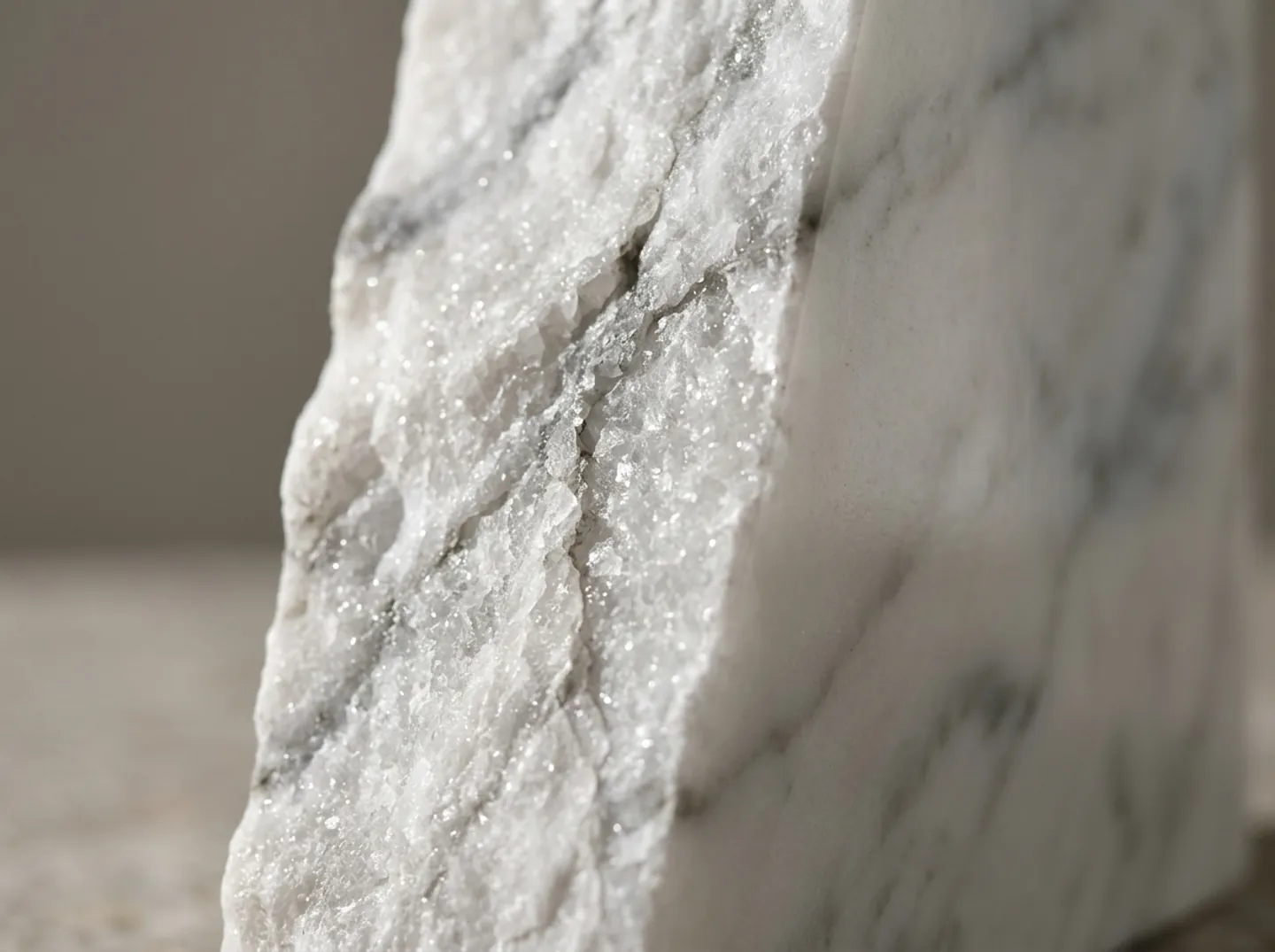
It is mostly the mineral calcite, which reacts with acids. Rain is slightly acidic even when it is clean, so marble statues, sills and gravestones lose a little surface every year.
AI-generated image, not a photograph of a real person or place.
Know the stone
Water, not chemicals
Leave the age showing
Gentle care, longer life
THE SHORT ANSWER
Marble meets acid, and slowly loses.
A soft carbonate stone under a slightly acid sky. Care means doing less, not more.
THE ROCK
Recrystallised limestone
Marble forms when limestone is changed by heat and pressure. The calcite recrystallises into a mass of interlocking crystals, which is why it polishes and carves so well.
The US EPA says normal rain has a pH of about 5.6, and acid rain usually between 4.2 and 4.4. Acids in rain and dust damage the surfaces of stone statues and monuments.
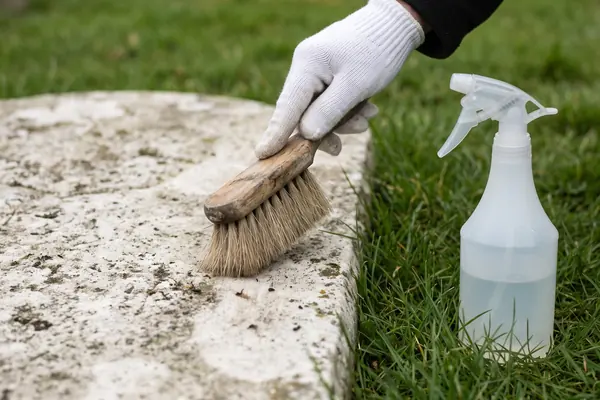
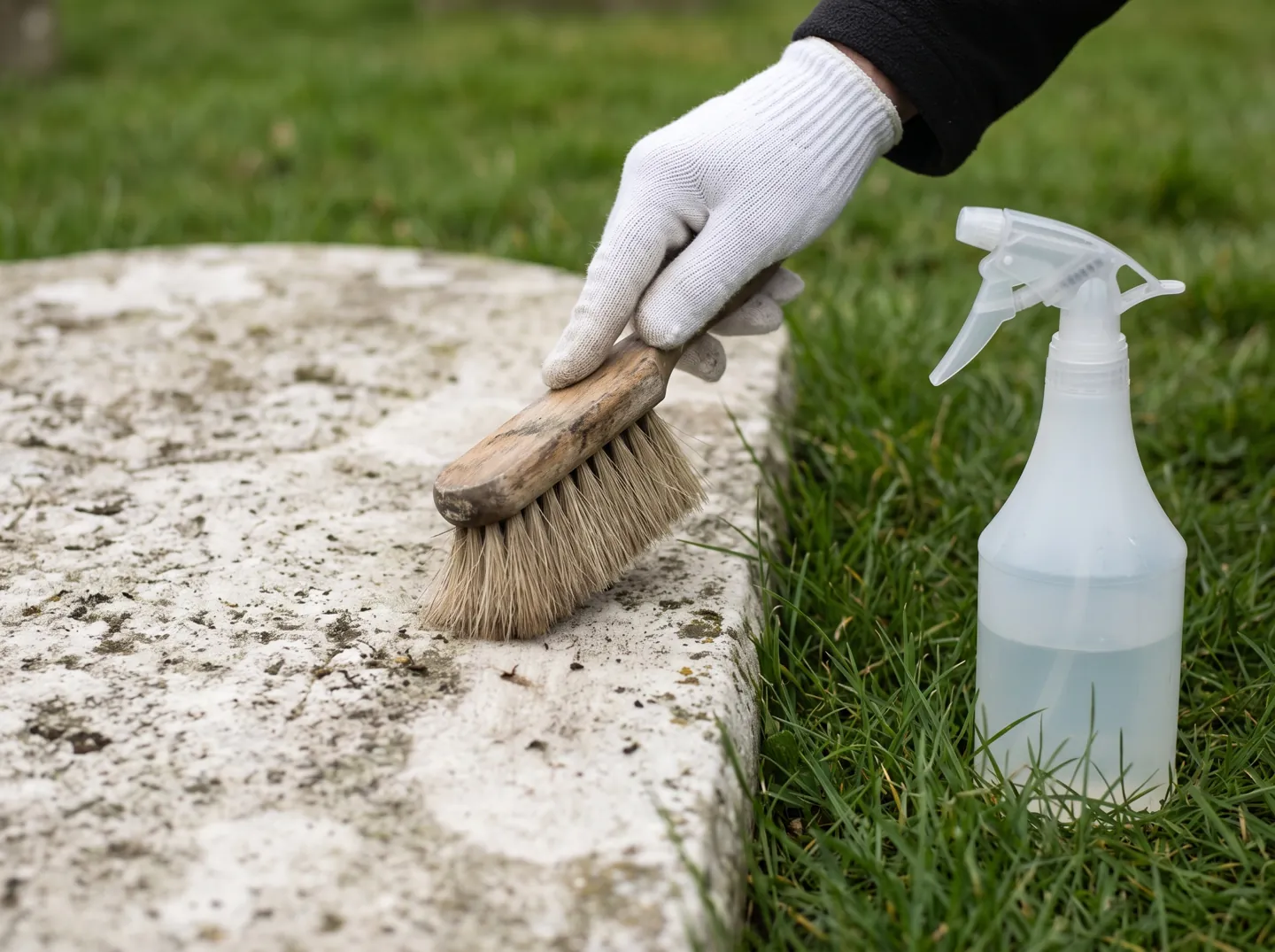
War Memorials Trust says each clean removes a protective layer of stone. Its advice is plain water, a natural-bristle brush, and cleaning only when it is really needed.
Pick something that meets a marble or limestone surface to see how much harm the sources say it can do. The bar shows the level of risk to the stone.
Based on US EPA acid rain pages, geology.com and War Memorials Trust cleaning guidance. For listed or historic memorials, ask a conservator first.
TWO NUMBERS WORTH KNOWING
Soft enough to carve, soft enough to wear.
One figure for how hard marble is, one for how acidic ordinary rain is.
3 of 10
Marble on the Mohs scale of 1 to 10
Because it is made of calcite, marble has a hardness of three. That makes it easy to carve into sculptures and ornaments, and also easy to scratch and wear.
HARDNESS · GEOLOGY.COM
≈ 5.6 pH
The pH of normal, unpolluted rain
Rain is slightly acidic because carbon dioxide dissolves into it, forming weak carbonic acid. Acid rain usually sits between pH 4.2 and 4.4. Neutral is 7.
RAIN · US EPA
The Geological Society of America's Gravestone Project asks volunteers to measure marble and other headstones. Early results suggested that cemeteries in big cities, where more sulfur dioxide and nitrogen oxides are released, were weathering most rapidly.
IF A STONE NEEDS CLEANING
Gentle, slow, and from the top.
These steps come from War Memorials Trust's helpsheet on cleaning stone with water. For a gravestone or memorial, check first who owns it and whether permission is needed.
Ask whether it needs it
Clean only when lettering or detail is becoming hard to read, or dirt is hiding the stone's condition. Not just for looks.
Try a small hidden patch
Test in a discreet area first, and leave delicate lettering alone if the trial shows any risk.
Water and a soft brush
Use a natural-bristle brush and a spray bottle of water with nothing added. Never a steel-wire brush.
Top down, light circles
Work downwards in gentle circular motions, do not scrub, and stop as soon as you fear damage.
AI-generated image, not a photograph of a real person or place.AI-generated image, not a photograph of a real person or place.
OLD STONES, NEW TRENDS
Clean-looking is not the same as cared for.
The Diocese of Oxford warned in 2026 that social media videos of people scrubbing gravestones with wire brushes, pressure washers and bleach can cause irreversible damage. The harm often shows months later, as stone flakes, crumbles or stains.
It notes that many churchyard memorials are soft stones such as Portland limestone or Bath stone, that cleaning a churchyard monument generally needs permission, and that lichens on stones can be rare or protected species.
Questions
Questions people ask
Is marble the same as limestone?
Not quite. Marble forms when limestone is altered by heat and pressure, so its calcite recrystallises into interlocking crystals. Both are mostly calcium carbonate, so both react with acids.
Why does acid harm marble?
Marble is mainly calcite, a form of calcium carbonate, which reacts with many acids. It is so good at neutralising acid that crushed marble is used to reduce acidity in streams, lakes and soils.
Is rain really acidic?
Slightly, yes. The US EPA says normal rain has a pH of about 5.6 because carbon dioxide dissolves into it. Rain polluted by sulfur dioxide and nitrogen oxides usually sits between pH 4.2 and 4.4.
Can I clean an old gravestone myself?
Guidance urges caution. War Memorials Trust says most cleaning should be done by a specialist, and the Diocese of Oxford says churchyard cleaning generally needs permission and consultation with the family or heirs.
Should I scrape lichen off a memorial?
Think first. War Memorials Trust says such growths are rarely harmful to stone, and some lichens are legally protected, so removing them could lead to prosecution.